FPGA SQUARE ROOT CALCULATOR
Digital Systems Design Course Project • Academic Year 2025-2026
Digital Systems Design Course Project • Academic Year 2025-2026
Computer Science & Engineering 5
Algorithm Design and Development & Testing
Mathematical modeling, Python/C prototyping, Algorithm verification, Testing procedures
Computer Science & Engineering 1
SystemVerilog Implementation & Hardware Integration
FPGA implementation, Pin assignment, Hardware testing, SystemVerilog optimization
Single-cycle operation using pure combinational logic, no pipelining required
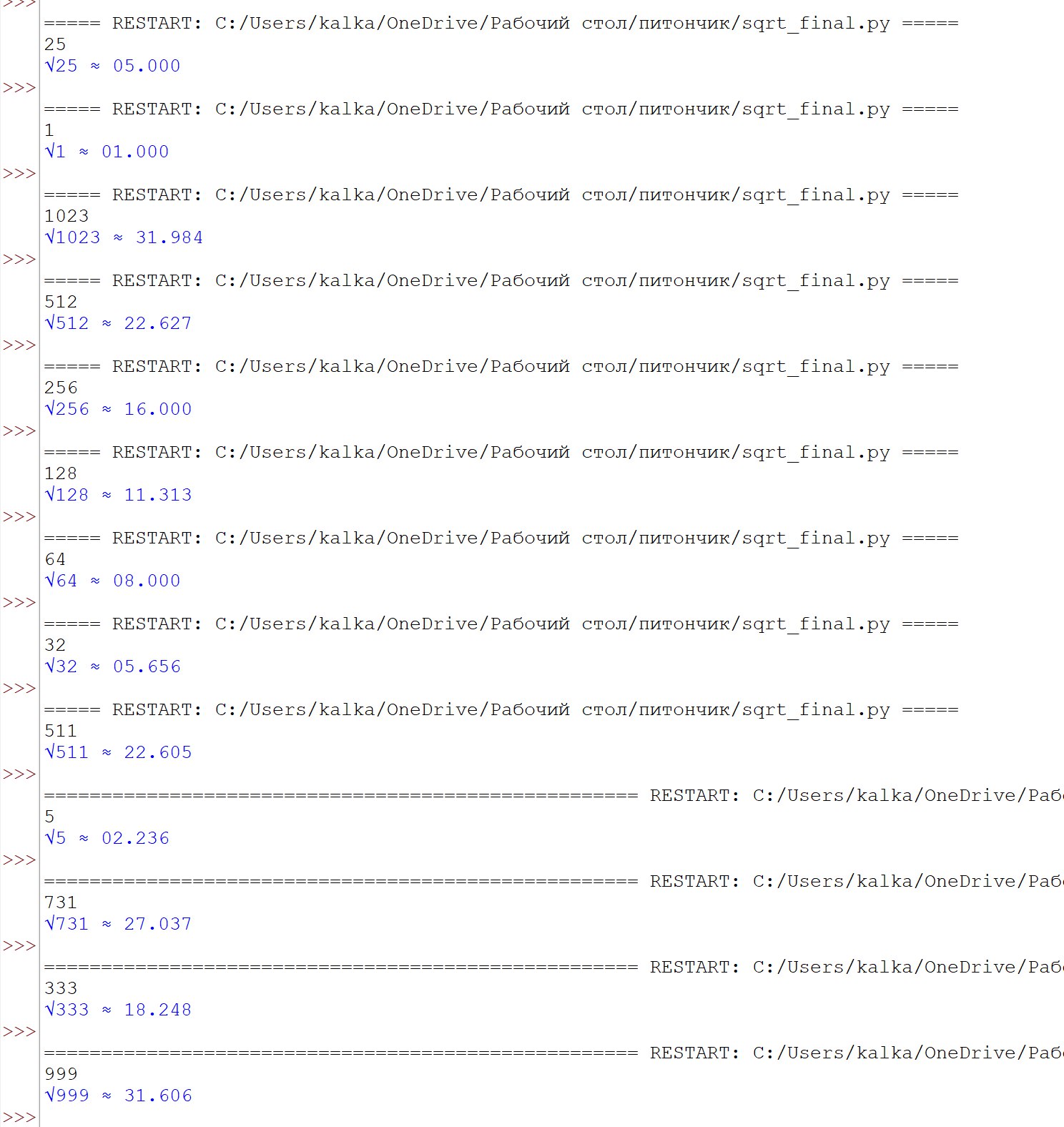
Three decimal places (0.001 resolution) achieved through fixed-point arithmetic scaling
Five seven-segment digits with precisely positioned decimal point
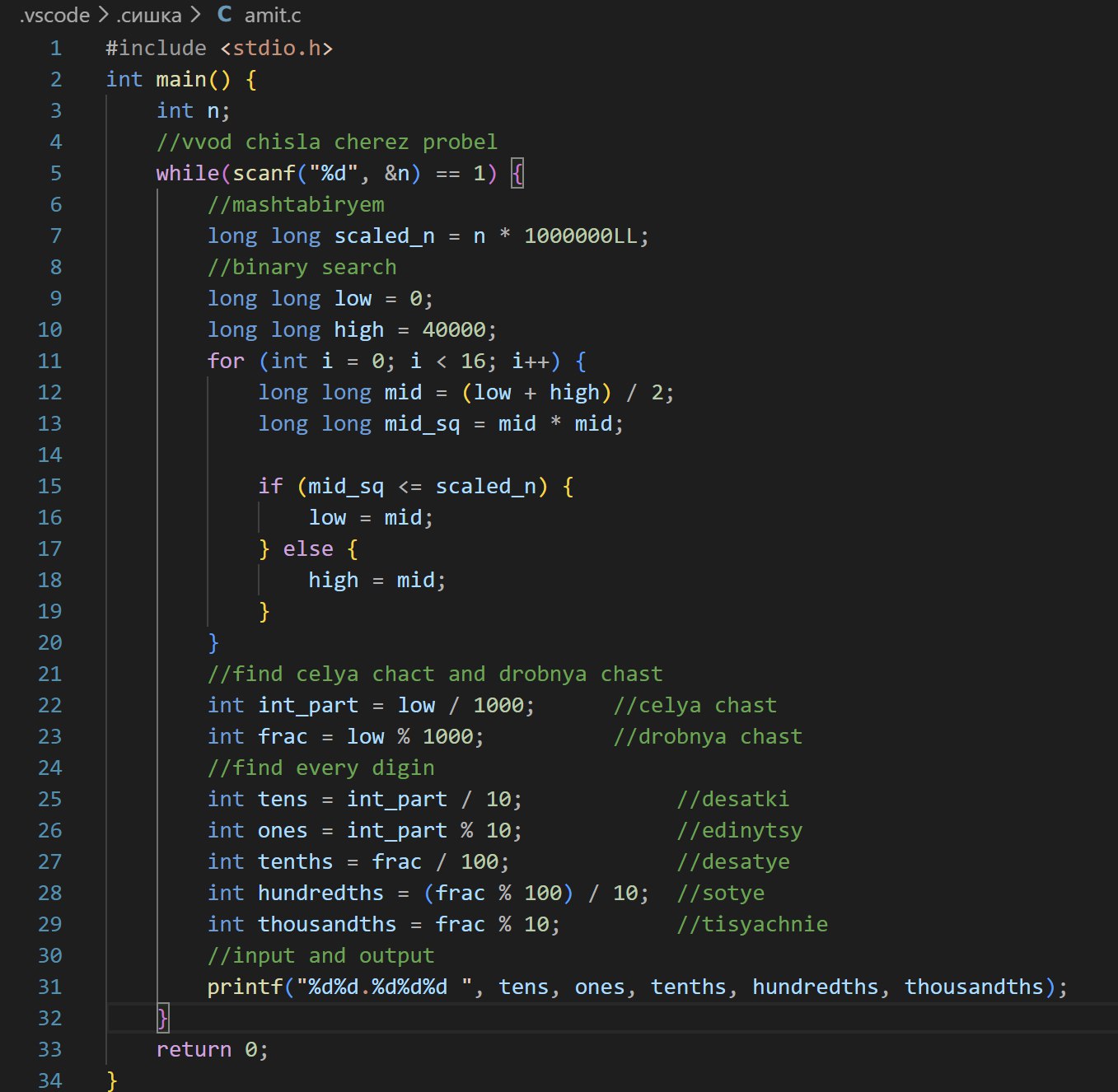
16-iteration binary search algorithm with minimal FPGA resource usage
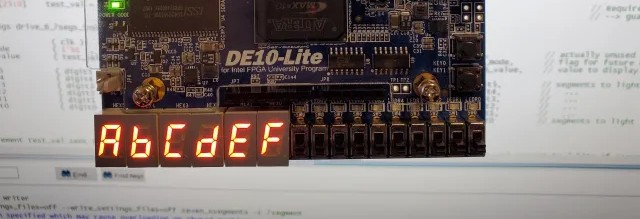
10-bit binary switches providing input range 0-1024
Binary Search Unit with exactly 16 iterations for optimal precision
5× seven-segment displays with controlled decimal point
Pure combinational logic delivering results in single clock cycle
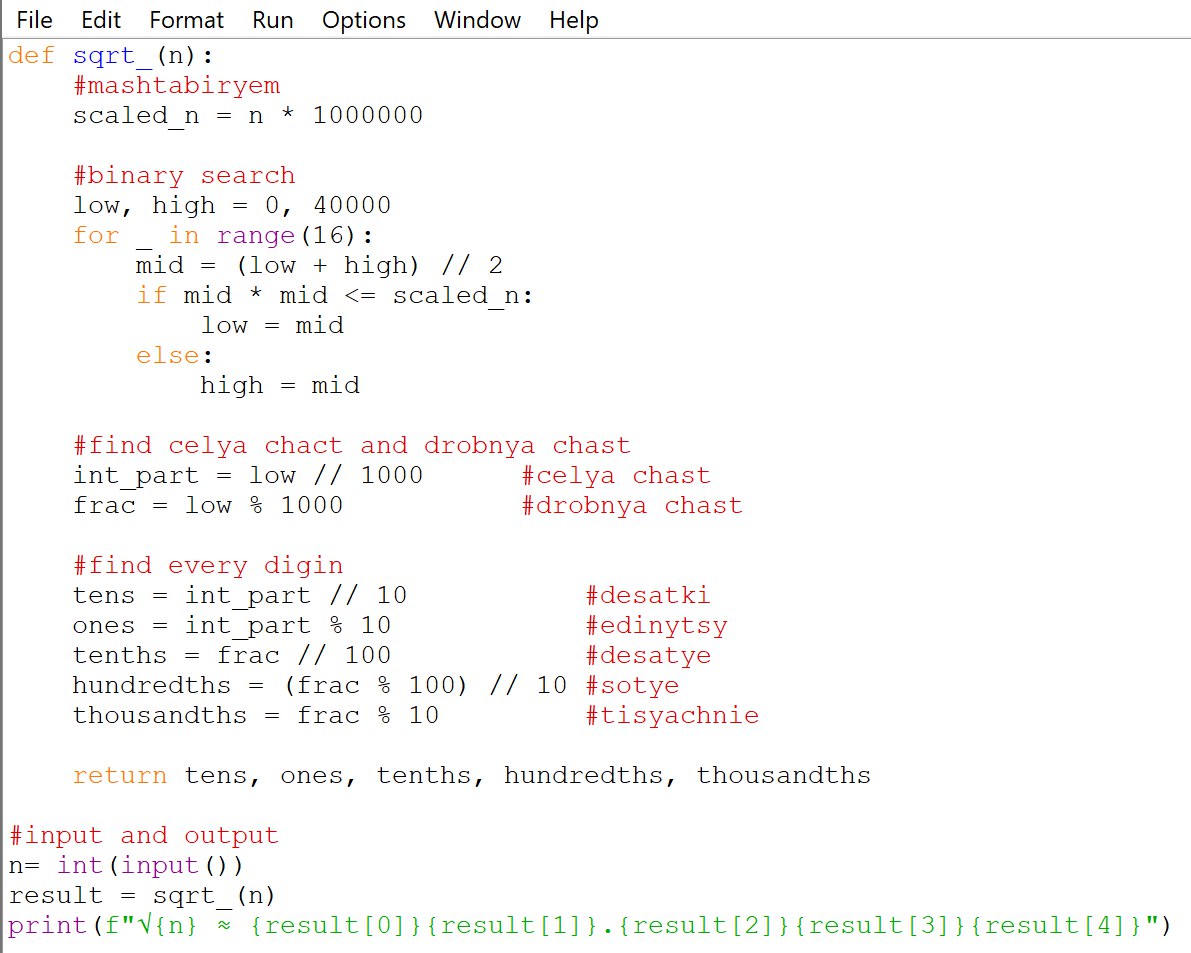

// Binary search for integer part
always @(*) begin
    n = sw;

    if ((8'd8 * 8'd8) <= n) begin
        root = 8;
    end else begin
        root = 0;
    end

    if (((root+4)*(root+4)) <= n) begin
        root = root + 4;
    end

    if (((root+2)*(root+2)) <= n) begin
        root = root + 2;
    end

    if (((root+1)*(root+1)) <= n) begin
        root = root + 1;
    end
end
// Calculate all possible fractional values
wire [15:0] t0 = (root*10+0)*(root*10+0);
wire [15:0] t1 = (root*10+1)*(root*10+1);
// ... t2 through t9
wire [15:0] target = n * 100;

// Find minimal difference
function [15:0] diff;
    input [15:0] a, b;
    begin
        diff = (a>b) ? (a-b) : (b-a);
    end
endfunction
// Complete SystemVerilog module
module sqrtt(
    input  [7:0] sw,          // 8-bit input
    output [6:0] hex1,        // Integer part display
    output [7:0] hex0         // Fractional part display
);

    reg [4:0] root;           // Integer root (0-15)
    reg [3:0] frac;           // Fractional digit (0-9)
    reg [7:0] n;

    // Integer root calculation (binary search)
    always @(*) begin
        n = sw;
        // ... binary search logic ...
    end

    // Fractional part calculation
    wire [15:0] t0  = (root*10+0)*(root*10+0);
    wire [15:0] t1  = (root*10+1)*(root*10+1);
    // ... t2 through t9 calculations
    wire [15:0] target = n * 100;

    // Find minimal difference for fractional digit
    always @(*) begin
        reg [15:0] best;
        best = diff(t0, target);
        frac = 0;

        if (diff(t1,target) < best) begin best = diff(t1,target); frac = 1; end
        // ... compare t2 through t9 ...
    end

    // Seven-segment display function
    function [6:0] seg7;
        input [3:0] d;
        begin
            case (d)
                4'd0: seg7 = 7'b1000000;  // "0"
                4'd1: seg7 = 7'b1111001;  // "1"
                // ... digits 2-9 ...
                default: seg7 = 7'b1111111; // Blank
            endcase
        end
    endfunction

    assign hex1 = seg7(root[3:0]);      // Integer part
    assign hex0[6:0] = seg7(frac);      // Fractional part
    assign hex0[7] = 1'b0;              // Decimal point control

endmodule
// Fixed-point binary search algorithm for FPGA
always_comb begin
    // Scale input for 3 decimal places precision
    scaled_n = sw * 32'd1000000;

    low = 0;
    high = 40000;   // sqrt(1024*1e6) upper boundary

    // Unrolled 16-iteration binary search
    repeat (16) begin
        mid = (low + high) >> 1;      // Efficient division by 2
        mid_sq = mid * mid;

        if (mid_sq <= scaled_n)
            low = mid;
        else
            high = mid;
    end

    // Extract integer and fractional parts
    int_part = low / 1000;
    frac = low % 1000;
end
// Digit extraction for display output
assign frac_h = frac / 100;        // Hundredths digit
assign frac_t = (frac % 100) / 10; // Tenths digit
assign frac_o = frac % 10;         // Thousandths digit

assign int_t = int_part / 10;      // Tens digit
assign int_o = int_part % 10;      // Ones digit

// Seven-segment display drivers
assign HEX4 = seg7(int_t);         // Display tens
assign HEX3 = seg7(int_o);         // Display ones with decimal point
assign HEX2 = seg7(frac_h);        // Display tenths
assign HEX1 = seg7(frac_t);        // Display hundredths
assign HEX0 = seg7(frac_o);        // Display thousandths
Artem Burmyakov
For expert guidance in digital systems design and FPGA architecture
Mikhail Kuskov
For invaluable support in hardware testing and validation methodologies
Digital Systems Design Course • Computer Science & Engineering Department
Academic Year 2025-2026